How to Handle Emergency Recovery for Electric Cars
Last Updated: October 25, 2026
Quick Summary
Emergency recovery for electric cars involves safely pulling over, assessing whether the battery is flat or partially charged, and calling a specialist recovery operator with your location and vehicle details. If the car is undamaged and close to a charger, mobile EV charging may add enough range to reach it; otherwise, flatbed recovery is the safest option to prevent drivetrain damage.
- Pull over away from traffic, switch on hazard lights, and move everyone to safety before assessing the situation.
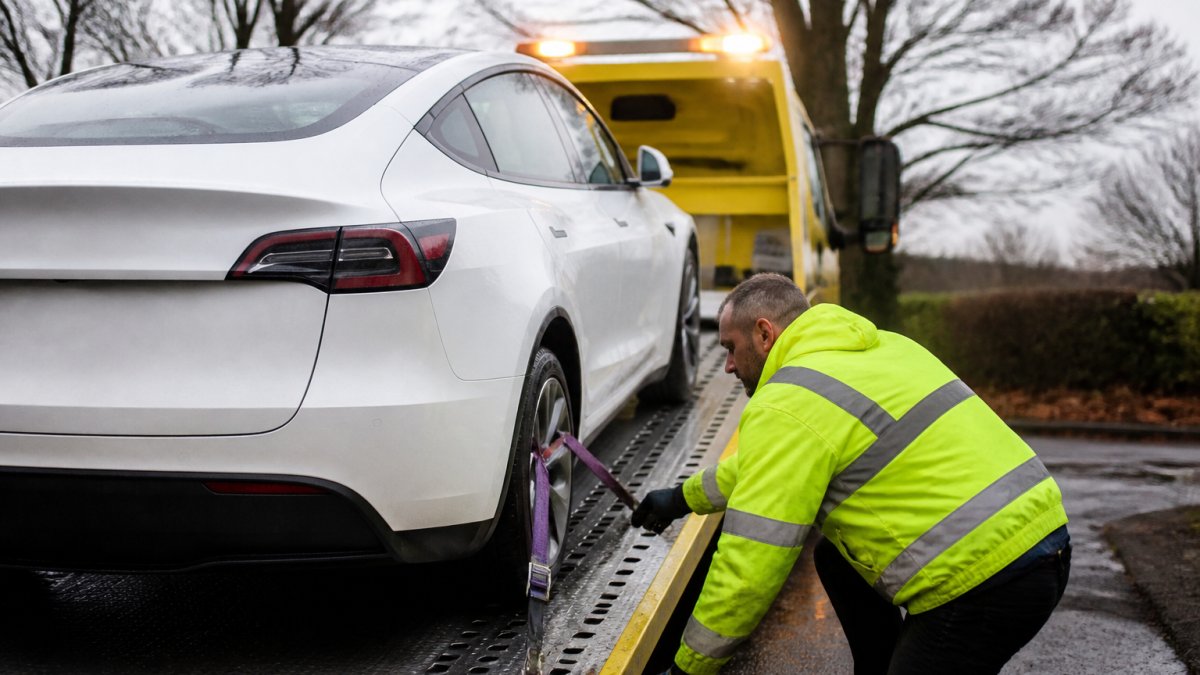
- A flatbed recovery truck is the safest method for most electric cars, keeping all wheels off the ground to prevent drivetrain damage.
- Mobile EV charging can add 20-50 miles of range if the vehicle is undamaged and a compatible charger is within reach.
- Never allow standard tow trucks to tow an EV by rope or chain, as this risks serious damage to the battery and motor.
- When calling for help, provide your exact location, vehicle details, battery status, and any signs of damage or smoke immediately.
Table of Contents
- Assess Your Situation and Move to Safety
- What to Do If an Electric Car Runs Out of Charge
- Safety Precautions Around a Damaged High-Voltage Battery
- Calling for Help: Information to Give Your Recovery Operator
- Understanding Electric Car Towing and Recovery Methods
- Safe Recovery of Damaged Electric Vehicles
- Mobile EV Charging as an Alternative to Full Recovery
- Arranging Your Emergency Recovery Service
- Frequently Asked Questions
Assess Your Situation and Move to Safety
When your electric car breaks down, safety comes first. Pull over away from traffic, switch on your hazard lights, and on a motorway move as far onto the hard shoulder as possible.
Get everyone out and away from the traffic flow.
Once safe, assess what happened: flat battery, warning light, visible damage, smoke, or unusual smells? Photograph any warning messages, they help the recovery operator prepare before arriving.
What to Do If an Electric Car Runs Out of Charge
A depleted traction battery is one of the most common reasons for emergency recovery for electric cars. You cannot buy fuel nearby, bump-start an EV, or tow it for a quick fix. The right response depends on remaining charge, location, and whether the vehicle is otherwise sound.
Step 1: Confirm what the car is telling you
Distinguish a low-charge warning from a genuine failure: a reduced-power message differs from a sudden drop to zero, a red battery fault icon, or a 'traction battery fault' message. Photograph the dashboard. In reduced-power or turtle mode, treat it as a limited-distance warning, you may still reach a charger.
Step 2: If you have charge left, prioritise reaching a charger
Use the remaining range deliberately:
- Switch off climate control, heated seats, and rear demist; these draw significant power.
- Reduce speed, drag rises sharply above about 50-60 mph.
- Use a charging app to find the nearest compatible charger and check its status first.
Many modern EVs show a reserve below zero on the range display; do not rely on it. Plan to arrive with a margin rather than gambling on the last few miles.
Step 3: If you cannot reach a charger, stop safely and call for help
If the car will not move under its own power, recovery is the only realistic option. Do not push it on a live carriageway or let an unprepared tow truck tow it, EVs need specialist handling to avoid drivetrain and battery damage.
When you call, state clearly that the vehicle has a depleted traction battery and whether it is otherwise undamaged. This determines whether a mobile charging van, a flatbed, or a specialist EV recovery unit is dispatched.
Step 4: Choose between mobile charging and full recovery
A mobile EV charging service can help if you are close to a charging point and the vehicle is undamaged. A charging van adds enough charge to reach the nearest charger, though availability varies by location, time, and coverage.
Use this rough decision guide:
- Vehicle undamaged, safe location, charger within reach of a top-up: mobile charging is worth asking about first.
- Vehicle undamaged but remote, or charger beyond a typical top-up range: flatbed recovery to a charger or destination is more reliable.
- Any sign of battery damage, smoke, overheating, or a red fault: do not request mobile charging; arrange specialist recovery and follow the safety guidance below.
Step 5: Know what recovery will do with the car
Ask whether the vehicle will go to a charging point, your home, or a repair facility, and confirm the destination before dispatch. If charging and continuing, make sure the charger is compatible and working; if repair, confirm the facility handles EV high-voltage systems. This avoids a second recovery the same day.
Follow these steps when your electric car's traction battery is depleted or critically low.
| Step | Action | Key Point |
|---|---|---|
| 1 | Confirm what the car is telling you | Distinguish low-charge warning from genuine traction battery fault |
| 2 | If charge remains, reach a charger | Switch off climate control; prefer 50 kW+ rapid charger; allow 20-30 minutes |
| 3 | If car won't move, call for help | State clearly: depleted traction battery and whether undamaged |
| 4 | Choose mobile charging or full recovery | Mobile charging if undamaged and charger within reach; flatbed if remote |
| 5 | Confirm recovery destination | Ask whether car goes to charger, home, or repair facility before dispatch |
Safety Precautions Around a Damaged High-Voltage Battery
A damaged high-voltage battery is the most serious hazard in an electric car breakdown.
Do not touch any part of the battery system, high-voltage components can deliver a fatal shock even when the car is off (Electric and hybrid vehicles).
Watch for these warning signs of battery damage:
- Smoke or steam coming from under the car
- A burning smell or chemical odour
- Visible cracks or leaks in the battery casing
If you see any of these signs, move further away and call emergency services immediately, do not wait for a recovery operator.
When you call for recovery, report any battery damage you've noticed so they bring the right equipment and precautions.
Calling for Help: Information to Give Your Recovery Operator
When you call for emergency recovery for electric cars, have ready:
- Your exact location (postcode, road name, landmark, or distance from a junction)
- Your vehicle make, model, year, and registration number
- Whether the battery is flat or partially charged, and any dashboard warnings
Give this clearly and calmly, the operator needs to know whether your car can be flatbed-towed or needs specialist handling, and whether there is any risk to their team on arrival.
If battery damage is suspected, mention it immediately, including any smoke, fire, or burning smell, it changes their approach and the safety equipment they bring.
You can contact roadside assistance when you need immediate help. Have your policy details or membership number ready if you're using breakdown cover.
Understanding Electric Car Towing and Recovery Methods
Not all tow trucks can safely recover an electric car. The wrong method can damage the battery, drivetrain, or charging system.
A flatbed recovery truck is the safest option for most electric cars.
A tow dolly, which lifts the front or rear wheels while the other end stays on the ground, can damage an EV's drivetrain if done incorrectly.
Never let a standard breakdown service tow your EV by rope or chain, this risks serious damage to the battery, motor, and transmission.
Safe Recovery of Damaged Electric Vehicles
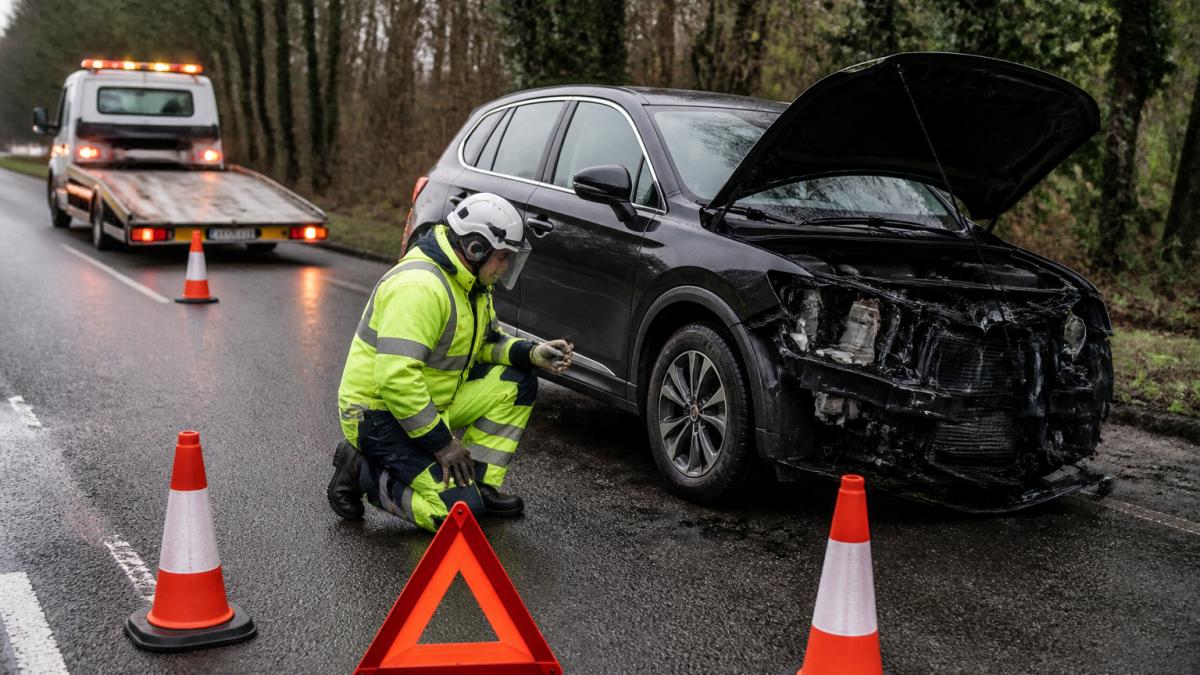
Damaged electric vehicles need extra caution during recovery: the high-voltage battery can be unstable after an impact or fire.
For fire-damaged vehicles, the team may need to wait for the battery to cool before moving it, since a damaged battery can reignite during transport.
The destination matters, not every garage can repair an electric car.
The Health and Safety Executive guidance on electric vehicle safety recommends that recovery teams receive proper training before handling damaged EVs.
Mobile EV Charging as an Alternative to Full Recovery
If your battery is flat but the car is undamaged and in a safe location, mobile EV charging might work. A charging van adds enough charge to reach a nearby charger or repair facility, a distinct service from flatbed recovery, and choosing correctly saves time and money.
When mobile charging is a good fit
Mobile charging works best when all of the following are true:
- The vehicle is undamaged and shows no battery fault, smoke, or overheating.
- You are in an accessible location, a lay-by, car park, residential street, or forecourt, where a van can park alongside safely.
- A compatible charger is within the range the service can add.
When it is not suitable
Do not request mobile charging if:
- There is any sign of high-voltage battery damage, a burning smell, smoke, or a red battery fault warning.
- The vehicle has been in a collision, even a minor one, that may have affected the battery or cooling system.
- You are on a motorway hard shoulder or in a live lane, safety and emergency services take priority.
Be realistic about range and time
A mobile top-up typically adds around 20-50 miles depending on the service, vehicle, and conditions, and cold weather reduces this. If the nearest working charger is 80 miles away, full recovery is the sensible choice.
Response times vary widely. Some services operate 24/7; others have limited hours or only cover certain routes. Ask for an estimated arrival time and compare it with the recovery option before committing.
What it costs and what to check
Mobile charging is usually priced per call-out plus a per-kWh or per-minute charge, though prices vary and some breakdown policies exclude or limit it. Before you book:
- Confirm the total price, including call-out fee and charge added.
- Check whether your breakdown cover includes mobile charging or you pay directly.
- Ask whether the charge reaches a specific working charger.
After the top-up
Drive directly to a working charger and charge to a comfortable margin, do not repeat the low-charge gamble. If any fault warning appeared before the top-up, have it checked by a qualified EV technician rather than assuming it was purely a flat battery.
Arranging Your Emergency Recovery Service
When you need emergency recovery for electric cars, act quickly.
Call your breakdown cover provider first if you have one. If you don't have cover, arrange your emergency recovery service directly with a local recovery operator.
Ask for a time estimate, a local operator can often reach you faster than a national service during busy periods.
If your vehicle is damaged, accident recovery services are essential. Tell the operator about any battery concerns immediately.
For comprehensive information on your recovery options and to understand what professional vehicle recovery services include, speak to an experienced operator who can assess your specific situation and advise on the best approach for your electric car.
Frequently Asked Questions
What should I do if my electric vehicle runs out of charge on the motorway?
Turn on your hazard lights immediately and move to the hard shoulder if safe to do so. Switch off the vehicle and turn on the interior light. Place a warning triangle 45 metres behind your car if you can do so safely. Call your breakdown cover provider or emergency services and inform them you have an electric vehicle. Remain inside the vehicle unless it is unsafe to do so. Do not attempt to push the car or use a standard tow rope, electric cars require specialist recovery equipment.
Can an electric car be towed after a breakdown?
Most electric cars can be towed, but only using specialist recovery methods. Two-wheel towing is generally not safe for electric vehicles because it can damage the drivetrain. Recovery operators should use a flatbed truck or a four-wheel lift to transport the vehicle with all wheels off the ground. Always inform your recovery operator that you drive an electric car so they can dispatch the correct equipment. Some manufacturers have specific towing restrictions, so provide your vehicle details when you call.
What information should I give a recovery operator when my electric car breaks down?
Provide your vehicle make, model, and year; your current location and postcode; a description of what happened (battery warning, system fault, smoke, etc.); your battery charge level if the display is still visible; whether you smell burning or see smoke; and whether the vehicle is still responding to the key fob or touchscreen. Tell them immediately that you have an electric vehicle so they send appropriately trained staff and specialist equipment. If the vehicle is damaged, describe the damage clearly.
Is mobile EV charging available if my electric car runs out of charge?
Mobile EV charging services are increasingly available across the country and can restore enough charge to reach a charging point without full recovery. However, availability depends on your location and the charging provider. Mobile charging typically takes 20 minutes to an hour and can add 20-50 miles of range. Not all vehicles are compatible with all mobile chargers. If you are stranded far from a charging point or in poor weather, full recovery with a flatbed may be a more suitable option than waiting for a mobile charger.
Breakdowns are stressful, especially when you're driving an electric car for the first time. Knowing what to do before it happens makes a real difference. Stay safe, provide clear information to your recovery operator, and let specialists handle the transport. With the right support, you'll be back on the road quickly.